Competitive prices for top quality

Allium

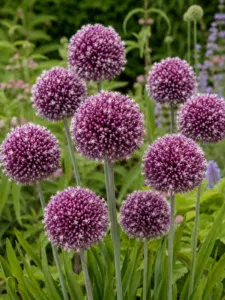
Allium bulbs produce large, decorative umbels with long stems. Ideal as cut flowers, easy to plant, and a real eye-catcher in both the garden and vase.

Frequently Asked Questions about Allium

1. What exactly are Alliums?

Alliums, also known as ornamental onions, are flower bulbs known for their spherical flower clusters packed with tiny flowers. They belong to the same family as onions, garlic, and leeks, but are grown for their beautiful flowers, not for eating. Alliums are real eye-catchers in the garden and also attract bees and butterflies.

2. When should I plant Alliums?

Plant alliums in the fall, from September to December, before the ground freezes. The bulbs need the winter to establish roots and then bloom in late spring or early summer (usually from May to July). This way, you can enjoy a colorful transition between tulips and summer flowers.

3. How deep and at what distance should I plant Alliums?

Plant Alliums approximately three times the height of the bulb. So, plant a 5 cm bulb 15 cm deep. Maintain Allium giganteum a distance of about 20–30 cm Allium moly . Place them in a sunny, well-drained spot for the best results.

4. Do Alliums come back every year?

Yes! Most Alliums are perennials and re-emerge every year. They require little care and even propagate slowly in the ground. Allow the foliage to die back after flowering, as this nourishes the bulb for the following season. Only remove the withered foliage when it is completely yellow.

5. Are Alliums suitable as cut flowers?

Yes, Alliums make excellent cut flowers! They have sturdy stems and last a long time in a vase. Even dried, they retain their decorative shape.

6. Are Alliums good for bees and butterflies?

Absolutely! Alliums are among the best bee- and butterfly-friendly flower bulbs. Their flower clusters are full of nectar and pollen, making them an important food source in spring. By planting Alliums, you support pollinators and give your garden a natural, vibrant look.