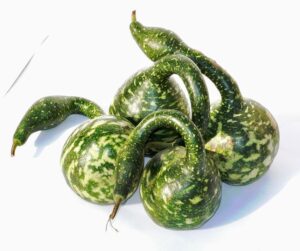
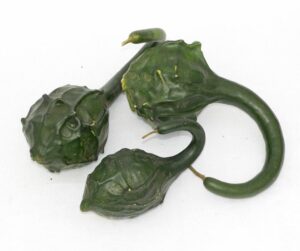
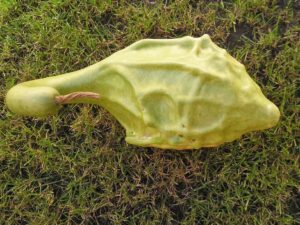
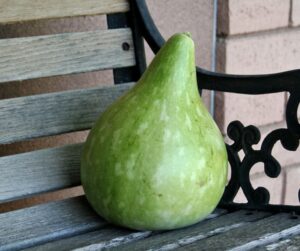
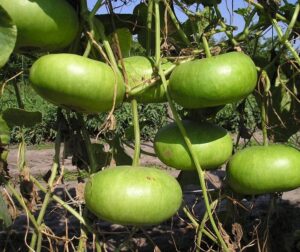
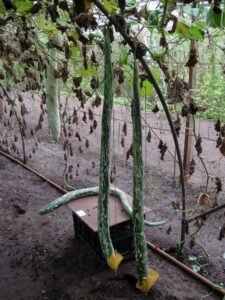
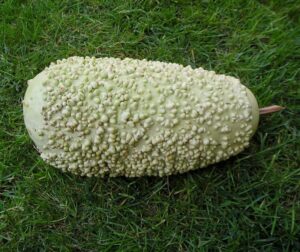
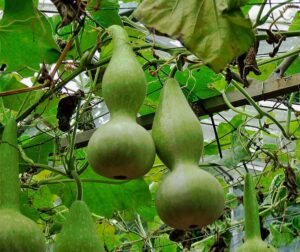
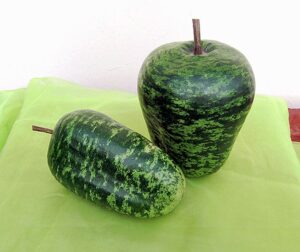
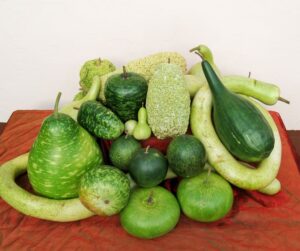
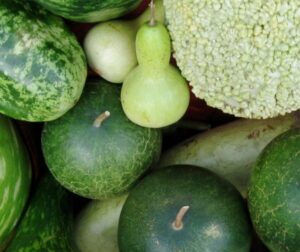
Lagenaria, the bottle gourd, is a climbing plant with long, decorative fruits in many different shapes. Suitable for gardens and pergolas, it creates a striking, natural decoration.
The genus Lagenaria , or bottle gourd, includes a wide range of species and varieties, valued primarily for their decorative and functional forms. The best-known species is Lagenaria siceraria , whose fruits are often dried and used for art objects, musical instruments, or utensils.
Lagenaria, also called bottle gourd or calabash, is a climbing plant in the cucumber family. It is primarily grown for its attractive, hard fruits, which are used for decoration or as utensils.
Young fruits, leaves, seeds, and flowers of Lagenaria are edible. The older, hard fruits are not suitable for consumption.
Yes, Lagenaria grows quickly. A sturdy fence, trellis, or pergola is necessary to support the climbing tendrils.
Pruning can make the plant more productive. Cut back side shoots when the plant is 2.5 to 3 meters tall to encourage more branching and flowers.
Lagenaria is pollinated by nocturnal insects, but hand-pollination can promote fruit set. Use a brush to transfer pollen from a male flower to a female flower.