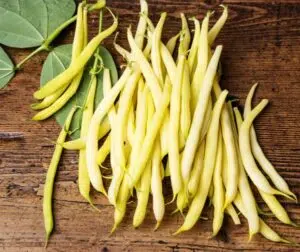
Legumes, rich in protein and fiber. They are versatile in the kitchen, suitable for boiling, steaming, or raw, and enhance salads, soups, and hot dishes.
Peas and beans both belong to the legume family. Generally, peas are the "green" variety eaten fresh (such as garden peas and snow peas), while beans (such as runner beans and French beans) are also consumed as young pods or dried.
2. When can I sow peas and beans?
It is best to sow pea seeds in early spring, as soon as the soil is workable and the danger of severe frost has passed. Some hardy pea varieties can even be sown in the autumn. Wait until mid-May to sow beans, when there is no longer a risk of night frost and the soil temperature is at least 12°C.
3. What is the best way to sow the seeds?
Sow both pea and bean seeds at a depth of approximately 2 to 5 cm, depending on the size of the seed. It is better to sow peas and beans directly in the open ground. They have a taproot that does not tolerate transplanting well. When sowing, maintain a distance of approximately 5 to 10 cm between the seeds. For pole beans, plant a few seeds per pole.
4. Do I need to fertilize the plants?
In general, peas and beans do not need much additional fertilizer, because they fix nitrogen from the air and release it into the soil.
5. What are the most common diseases in peas and beans?
Mildew is a common fungal disease affecting peas and beans. Fungal diseases such as Sclerotinia can also occur. You can recognize mildew by a white, powdery coating on the leaves. Ensure adequate air circulation to prevent this.