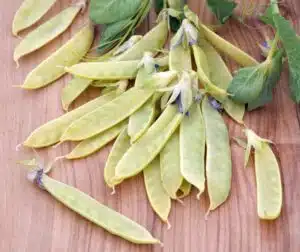
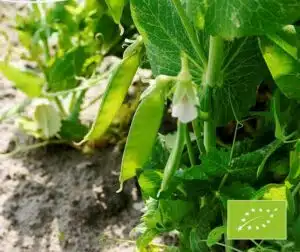
Pisum sativum (Gray pea) 'Desiree' – aromatic, ornamental gray pea with blue pods
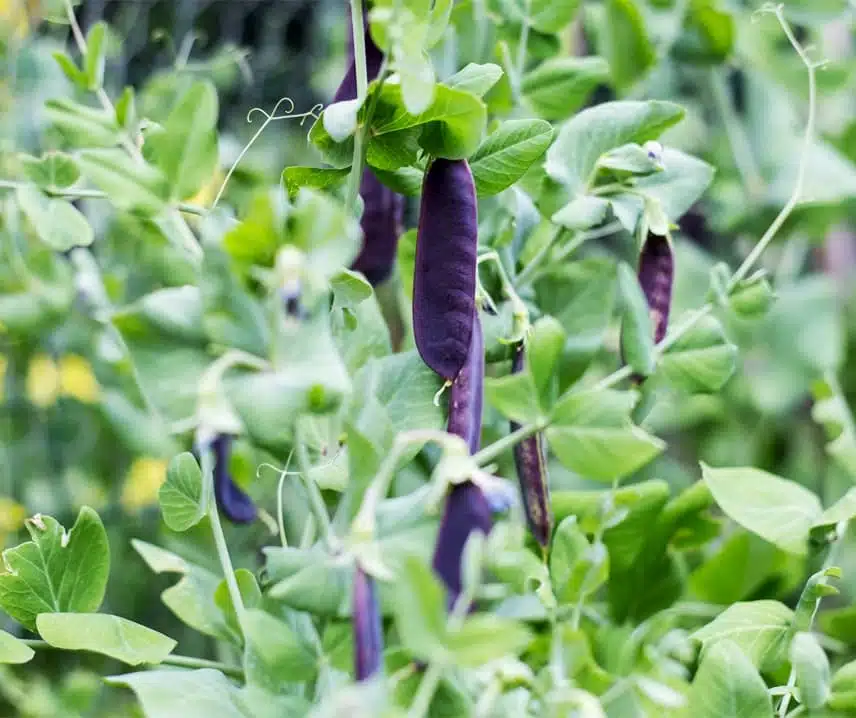
Pisum sativum (Gray pea) 'Desiree' is a unique, compact pea variety distinguished by its beautiful appearance and exquisite flavor. Gray peas are known for their aromatic, full character and are grown and prepared much like traditional shelling or sugar snap peas. 'Desiree' combines these familiar characteristics with striking ornamental value: violet-blue flowers and dark blue pods make it a true eye-catcher in the vegetable garden.
For gardeners seeking an ornamental, flavorful, and productive variety, this gray pea offers the perfect balance of yield, beauty, and culinary value.
Appearance and growth characteristics
'Desiree' stays manageable and compact, reaching a height of 60–80 cm, eliminating the need for a tall trellis. The plants have a robust growth habit and are easily manageable, even in smaller vegetable gardens or raised beds.
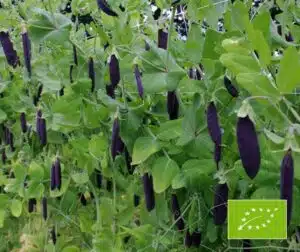
During flowering, beautiful violet-blue flowers appear, followed by deep, dark blue pods—a striking color contrast that immediately catches the eye against the fresh green foliage. This aesthetic value makes 'Desiree' attractive not only for food production but also as an ornamental plant for an edible ornamental garden, border, or organic cultivation strip.
Inside the pods are the real treasures: grey peas with a full, aromatic flavour, very suitable for fresh preparation but also excellent for drying and long-term storage.
Taste and use in the kitchen
Grey peas have been prized for centuries for their rich, earthy flavor and versatile culinary uses. Freshly shelled, they have a mildly sweet, full flavor, ideal for summer dishes. Dried, they become firmer and more intensely aromatic—perfect for stews, winter soups, purées, and traditional bean dishes.
Application tips:
-
Fresh in salads or warm with potatoes and fish
-
Lightly steamed or blanched as a healthy vegetable
-
Dried for soups, stews and curries
-
Also suitable for preserving and freezing
Anyone who wants to save a valuable harvest for later in the year will enjoy 'Desiree'.
Cultivation information – easy, reliable and decorative
Pisum sativum 'Desiree' is easy to grow and requires little soil. Sow directly in the ground from mid-March to the end of June. A sunny location yields the highest yield and the most beautiful color in the pods.
Sowing advice:
-
Row spacing: 30–40 cm
-
In the row: 4–5 cm
-
Sowing depth: 3–4 cm
When the plants are about 10 cm tall, it's recommended to lightly earth up the soil. This promotes stability and encourages strong root development. A trellis isn't necessary, but light support can facilitate harvesting, especially in windy locations.
As with most peas, little to no fertilizer is needed. Peas live in symbiosis with nitrogen-fixing bacteria, allowing them to generate their own nutrients. Too much fertilizer leads to excessive leaf growth and reduced pod set—so simplicity is key.
Benefits of 'Desiree' at a glance
-
Aromatic, tasty grey pea
-
Compact growth: 60–80 cm, ideal for small gardens
-
Ornamental value due to violet-blue flowers and dark blue pods
-
Long sowing season: mid-March to the end of June
-
Fresh and dried application possible
-
Little fertilization required, suitable for organic cultivation
-
Beautiful combination of yield and ornamental value