Pisum sativum (Gray pea) 'Blauwschokker' BIO – a historic pea variety with character
Pisum sativum (Gray pea) 'Blauwschokker' BIO is a unique and distinctive pea variety with a rich history. This true-to-life variety belongs to the traditional gray pea family and is immediately striking for its deep-colored, blue-purple pods. With roots in East Frisia, where this heirloom variety has been cultivated for generations, 'Blauwschokker' has become a beloved specialty in hearty, rustic cuisine. In terms of flavor, color, and uses, this variety offers a unique heritage that is increasingly being rediscovered by vegetable gardeners, permaculturists, and enthusiasts of authentic crops.
Unique features and appearance
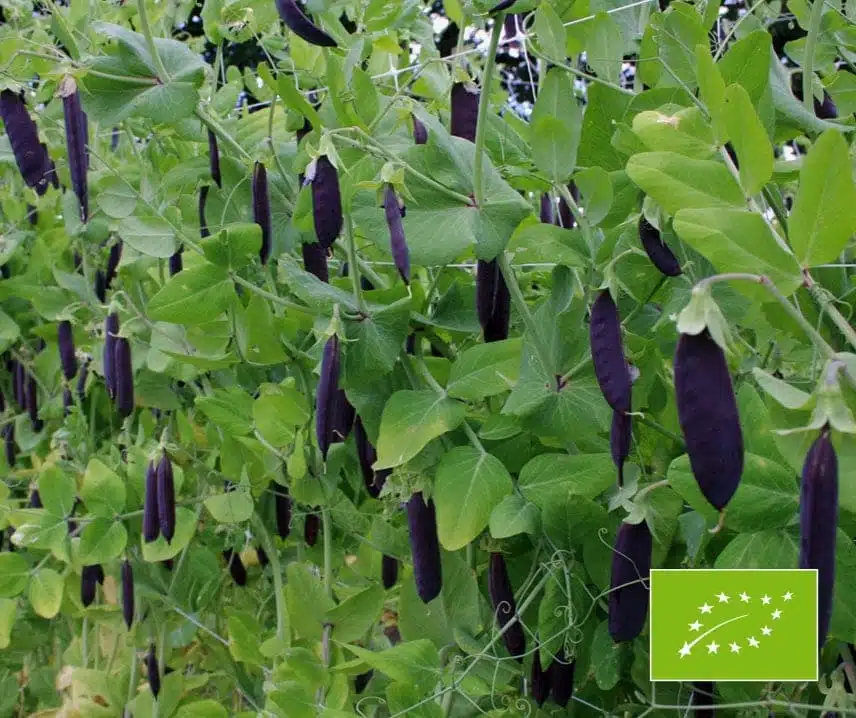
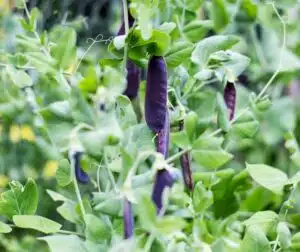
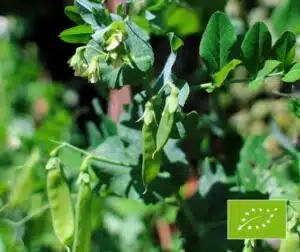
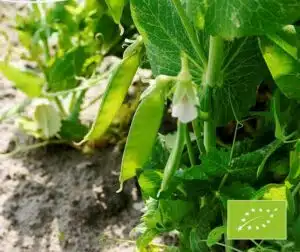
What makes Pisum sativum 'Blauwschokker' so distinctive is the combination of purple flowers, blue pods, and green seeds – a vibrant display of colors that makes the plant a jewel in the vegetable garden. The sturdy plants grow to about 80 cm tall and grow similarly to regular peas. During flowering, beautiful purple-pink flowers appear, attracting a lot of attention and developing into dark, sturdy pods.
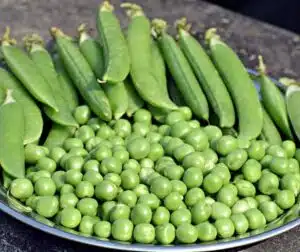
The green peas inside are exceptionally tender and sweet when young. At this stage, 'Blauwschokker' can even be eaten like sugar snap peas, when the pods are still thin and juicy. Allowed to ripen on the vine, the peas develop into full-fledged garden peas with a delicately sweet, rounded flavor. Dried, they can be stored for months to years and are ideal for soups, stews, and traditional regional dishes.
Cultivation information – simple, robust and productive
Blauwschokker is an organic, robust variety that requires little cultivation. Sow directly in the ground from late March to early April. A wide planting pattern promotes plant health.
Choose a sunny spot with well-drained, not too nitrogen-rich soil. Peas naturally thrive in symbiosis with nitrogen-fixing bacteria and therefore require little to no fertilizer. Overfertilization primarily results in leaf growth, while pod yield can actually decrease. A trellis or mesh provides support, but because 'Blauwschokker' grows to a medium height, lighter support is often sufficient.
Harvest and use – fresh, dried or as a pod
The harvest period runs from June to July, depending on sowing time and weather conditions. Harvesting can take place at different times for various applications:
-
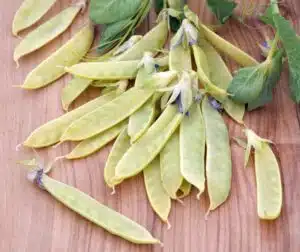
Young pods – like sugar peas, tender and sweet
-
Freshly shelled peas – ideal for salads, stir-fries, risotto and side dishes
-
Fully ripe, dried peas – winter hardy, strong in flavour and perfect for soup
Dried Blauwschokker peas are known for their excellent shelf life. Historically, this made them valuable to farming families who wanted to preserve food for the colder months. Today, this characteristic aligns perfectly with sustainable food production, self-sufficient gardening, and minimizing food waste.
Why choose Pisum sativum 'Blauwschokker' organic?
-
Historical, biodiverse cultivation heritage with cultural value
-
Versatile in use: young as sugar pea, ripe as garden pea, dried for soup
-
Beautiful ornamental value due to purple flowers and dark-colored pods
-
Little fertilization required, ideal for organic cultivation and nature-inclusive vegetable gardens
-
High yielding and long storage life as a dried pea
Blauwschokker is therefore not just a crop, but a culinary and visual highlight. A perfect choice for lovers of old varieties, organic seeds, and traditional field crops with flavor, history, and future value.