Competitive prices for top quality

Lathyrus

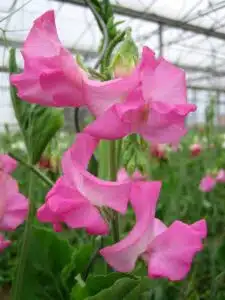
Our Lathyrus is specially selected for its long flower stems. These selections are suitable for production in low-light conditions in winter and spring.

Frequently asked questions about Lathyrus

1. What different types of Lathyrus are available for cultivation?

Lathyrus falls into two main groups:
Lathyrus odoratus: this is the classic sweet pea, known for its enchanting fragrance and delicate flowers. This species is usually grown as an annual and is perfect for gardens and bouquets.
Lathyrus latifolius: a perennial that is less fragrant but offers longer flowering periods and a more robust growth habit, making it ideal for borders and climbers.

2. What are the ideal growing conditions for Lathyrus?

Climate: Sweet peas thrive in cooler climates and grow best in spring or early summer. In warmer regions, they can be planted in partial shade to protect them from intense heat.
Soil: Runner beans prefer well-drained, fertile soil rich in organic matter. They also benefit from soil that retains moisture without becoming soggy.
Sunlight: Sweet peas grow best in full sun to partial shade, depending on the climate. In cooler regions, full sun is ideal, while in warmer regions, partial shade is preferable.

3. Can Lathyrus be grown in all regions?

Regional considerations: Sweet peas grow best in cooler climates, but can also adapt to warmer regions with proper care and some shade. The plant prefers well-drained soil and regular watering, especially in drier areas. In very hot climates, sweet peas are often planted in early spring, before the heat increases.
Sweet peas are a timeless, elegant climber that adds beauty and fragrance to gardens and bouquets and is easily grown by gardeners of all skill levels.

4. When do I harvest Lathyrus for cut flower use?

Harvest when some of the flowers on the cluster are just beginning to open for maximum vase life.

5. How do I sow Lathyrus?

Soak the seeds in lukewarm water for a day to soften the seed coat and promote germination. Sow the seeds 2–3 cm deep in moist, well-drained soil and provide warm conditions (18–20°C) for rapid germination.