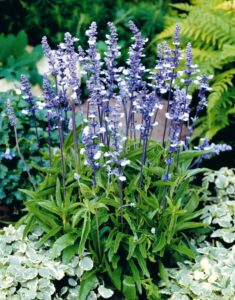
Salvia pratensis – natural, bee-friendly perennial
Salvia pratensis, also known as meadow sage, is a beautiful native perennial that is increasingly being used in natural and ecological gardens. This salvia species is native to Europe and is a familiar sight in flower-rich meadows and roadsides. Thanks to its striking blue to purple-blue flowers and strong ecological value, Salvia pratensis is an excellent choice for anyone who wants to create a low-maintenance and biodiverse garden.
Characteristics of Salvia pratensis
Salvia pratensis blooms from May to July with long flower spikes covered in a rich array of lip-shaped flowers. The color ranges from bright blue to deep purple, depending on the cultivar. The plant typically reaches a height of 40 to 70 centimeters and has sturdy, slightly hairy leaves that grow in a rosette. Its upright flowering habit adds structure and verticality to borders and wildflower meadows.
A key characteristic of this plant is its robustness. Salvia pratensis is completely winter-hardy and reliably returns every year. Furthermore, it can self-seed readily under favorable conditions, creating a natural and playful look in the garden.
Location and soil
Salvia pratensis prefers a sunny location. The more sun, the richer and longer the flowering period. The plant has few demands on soil, as long as it is well-drained. Dry to moderately nutrient-poor soil is ideal. In soil that is too rich or wet, the plant will grow less compactly and flowering may be reduced.
It is precisely these modest soil requirements that make Salvia pratensis ideal for natural gardens, prairie plantings, and flower-rich meadows. This plant is also frequently used in public green spaces due to its durability and low maintenance requirements.
Maintenance and care
Salvia pratensis is a low-maintenance perennial. Watering is only necessary during prolonged droughts. Fertilizing is usually unnecessary and can even be counterproductive in overly nutrient-rich soil. After flowering, the spent flower spikes can be removed to encourage a second, lighter bloom. If the flowers are left, the plant will produce seeds, which is beneficial for insects and natural dispersal.
In autumn, the dead foliage can be left standing as winter protection and a shelter for insects. Pruning is best done in spring.
Value for biodiversity
Salvia pratensis is a true bee and butterfly plant. Its nectar- and pollen-rich flowers attract numerous pollinators, including wild bees, bumblebees, and butterflies. This plant therefore makes a significant contribution to biodiversity in the garden. Combined with other native plants, it creates a robust ecosystem that benefits insects, birds, and small animals.
Application in the garden
This meadow sage is exceptionally versatile. In borders, Salvia pratensis combines beautifully with ornamental grasses, daisies, knotweed, and other prairie plants. It also feels perfectly at home in wildflower meadows or natural embankments. Its tranquil, natural appearance makes it suitable for both modern and rustic gardens.
Thanks to its robust growth, Salvia pratensis is also resistant to wind and rain, which makes it very suitable for open gardens and larger plantings.